
Flower Pressing
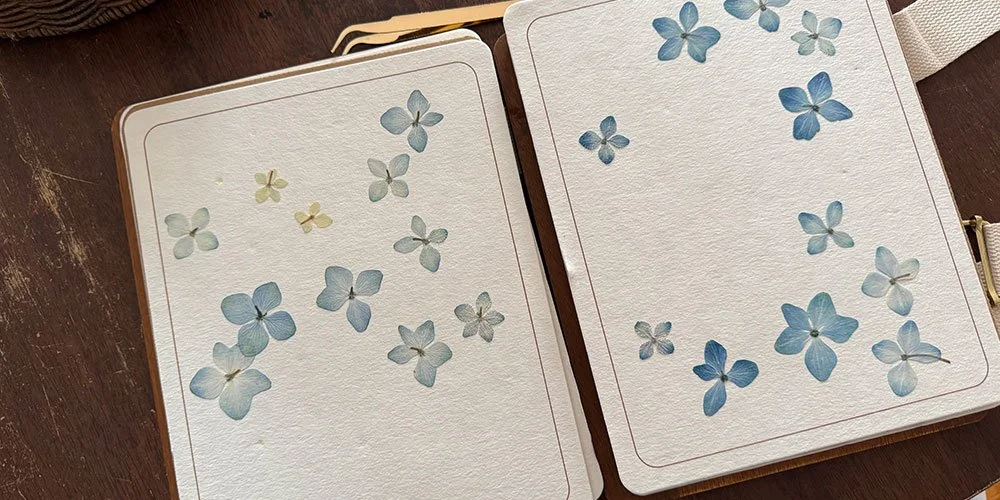
There is something magical about noticing the little things.
A single wild daisy growing beside a walking path. The last vibrant maple leaf before winter arrives. A tiny fern tucked beneath the trees. Fresh lavender from the garden.
Most of us admire these moments for only a few seconds before moving on with our day. But flower pressing invites us to slow down, collect these small treasures, and preserve them long after the season has passed.
For me, flower pressing isn't just a craft—it's a quiet practice of mindfulness. It encourages me to spend more time outside, to pay attention to nature's changing colors, and to create something beautiful with my hands.
It's one of my favorite ways to combine creativity and nature, and it's a wonderful project to enjoy alone or with children.
Why I Love Flower Pressing
In a world where everything feels fast, flower pressing asks us to be patient.
You gather flowers.
You arrange them carefully.
Then...you wait.
Weeks later, you're rewarded with delicate botanical artwork that tells the story of a particular moment in time.
Every pressed flower becomes a tiny memory.
Maybe it's a bloom from your own garden.
A flower picked during a family vacation.
A wildflower collected on a Sunday hike.
Or petals saved from a special celebration.
Unlike fresh flowers that fade within days, pressed flowers allow those memories to last for years.
Seeing Beauty Through the Seasons
One of my favorite things about flower pressing is that every season offers something completely different. It becomes a creative tradition that changes throughout the year.
Spring
Spring is full of soft colors and delicate blooms.
Look for:
Daisies
Pansies
Violets
Cherry blossoms
Forget-me-nots
Ferns
Clover
Dogwood blossoms
Everything feels fresh and full of possibility.
Summer
Summer provides the biggest variety of flowers and greenery.
Collect:
Lavender
Cosmos
Queen Anne's Lace
Black-eyed Susans
Coneflowers
Wildflowers
Herbs like rosemary, thyme, and sage
Hydrangea petals
Summer is the perfect time to create colorful botanical collections.
Autumn
Autumn may be my favorite season for pressing.
Instead of flowers, I begin collecting:
Colorful maple leaves
Oak leaves
Ferns
Seed heads
Small grasses
Golden wildflowers
Tiny pine branches
The warm oranges, reds, browns, and golds make beautiful artwork and seasonal décor.
Winter
Winter teaches us to notice beauty in quieter ways.
While flowers are scarce, you can press:
Evergreen sprigs
Cedar
Juniper
Pine needles
Holly leaves
Dried grasses
Eucalyptus
Winter is also a wonderful season to create art using flowers you've collected throughout the rest of the year.
How to Press Flowers
Flower pressing is surprisingly simple and requires very few supplies.
What You'll Need
A flower press (or several heavy books)
Fresh flowers and leaves
Parchment paper or blotting paper
Cardboard (optional)
Tweezers
Scissors
Step 1: Gather Your Flowers
The best flowers are freshly picked and completely dry.
Avoid flowers after rain or morning dew, as extra moisture can lead to browning or mold.
Try collecting flowers during a walk, from your garden, or even from a bouquet that's beginning to fade.
Step 2: Prepare the Flowers
Trim long stems.
Remove damaged petals.
If a flower is particularly thick, gently split it in half to help it dry more evenly.
The flatter the flower, the better it usually presses.
Step 3: Arrange Carefully
Place each flower between sheets of parchment or blotting paper.
Take your time arranging the petals exactly how you'd like them to look.
Once they dry, they will remain in that position.
Step 4: Apply Pressure
Place the flowers inside your flower press or between the pages of a heavy book.
If you're using books, stack additional heavy books on top to increase the pressure.
Step 5: Be Patient
Leave the flowers undisturbed for two to four weeks.
The drying time depends on the thickness of the flowers.
Resist the temptation to check them every few days—this is one craft that truly rewards patience.
Step 6: Remove Gently
Once completely dry, use tweezers to carefully lift each flower.
Pressed flowers become surprisingly delicate, so handle them gently.
Step 7: Create Something Beautiful
Now comes the fun part.
Your pressed flowers can become:
Framed botanical artwork
Greeting cards
Bookmarks
Journals
Scrapbooks
Gift tags
Candle decorations
Resin projects
Handmade ornaments
Recipe book embellishments
Seasonal table settings
There are endless ways to incorporate them into your home.
Tips for Beautiful Results
Collect flowers that are free from moisture.
Press flowers as soon as possible after picking.
Avoid flowers with very thick centers unless you separate the petals.
Label each collection with the date and location where you found it.
Press extra greenery—you'll use more leaves than you think.
Experiment with color combinations inspired by each season.
A Simple Family Tradition
One of my favorite ideas is keeping a small basket by the door.
Whenever we come home from a walk, we add one little treasure from nature—a flower, a fern, a leaf, or an interesting piece of greenery.
Over time, those collections become artwork, bookmarks, handmade gifts, and reminders of afternoons spent outside together.
It's such a simple tradition, but it encourages children to notice the changing seasons and appreciate the beauty that's all around them.
Creativity Begins With Paying Attention
Flower pressing reminds us that creativity doesn't always begin in an art studio.
Sometimes it begins on a quiet walk.
With a single flower.
With muddy shoes after a hike.
With slowing down enough to notice the tiny details we usually rush past.
Every season has something beautiful to offer if we're willing to look closely.
Perhaps that's the real gift of flower pressing.
Not simply preserving flowers—
but preserving moments.
And sometimes, those moments become the most beautiful works of art of all.