
Flower Therapy: Why Flower Arranging Feels So Good
There are certain little rituals in life that make me feel more like myself.
For me, one of them is arranging flowers.
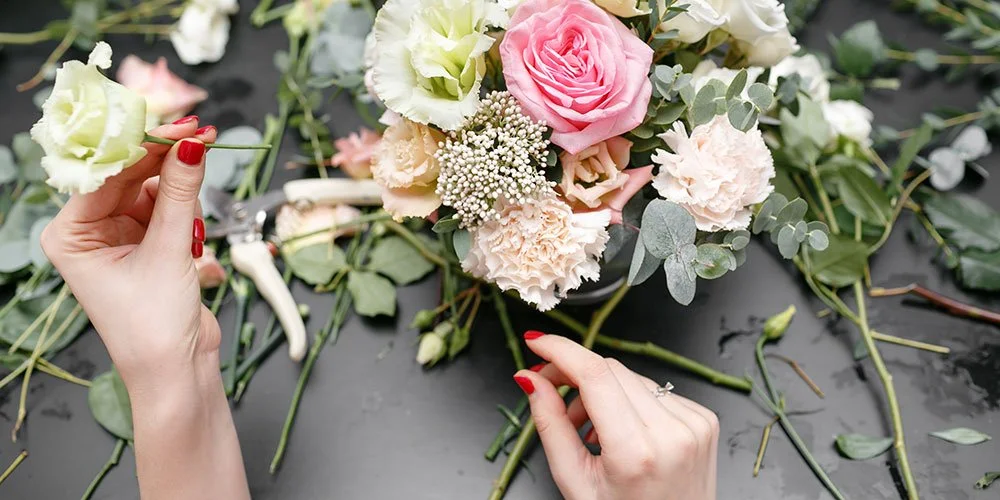
A couple of times a month, I bring home a bundle of flowers and spend some time arranging them in a vase. It sounds simple—and it is—but I have come to think of this little ritual as flower therapy.
There is something about being surrounded by flowers, touching the stems, choosing colors, trimming each one, and slowly watching an arrangement take shape that makes me feel calmer and happier. For a little while, I am not thinking about my to-do list, my phone, the laundry, or everything that needs to happen tomorrow.
I am simply arranging flowers.
And sometimes, that is exactly what I need.
What Is Flower Therapy?
When I say “flower therapy,” I don't mean formal therapy or a substitute for professional mental health care. I mean the kind of everyday ritual that gives you a chance to pause, breathe, create, and reconnect with yourself.
Flower arranging happens to combine so many things that naturally encourage mindfulness.
You are working with your hands.
You are paying attention to color, shape, texture, and movement.
You are surrounded by something living and beautiful.
And because flowers are temporary, there is also something wonderfully grounding about them. You don't arrange flowers expecting them to stay perfect forever. You enjoy them while they are here.
That, to me, is part of the beauty.
Why Flowers Can Feel So Therapeutic
It Gives Your Mind Somewhere to Go
There is something very calming about having a simple, creative task in front of you.
When I arrange flowers, I don't have to make a hundred decisions. I only have to decide which flower should go here, which one should be a little taller, where I need another bit of green, or whether the arrangement feels balanced.
My attention moves away from everything else and toward what is right in front of me.
That is mindfulness in a very natural form.
You Get to Work With Your Hands
There is something satisfying about doing something tangible.
We spend so much of our lives looking at screens and thinking about things that haven't happened yet—or replaying things that already have.
Flower arranging brings you back into the physical world.
You cut a stem.
You touch a petal.
You fill a vase with water.
You move a flower.
You step back.
You look again.
The process itself becomes calming.
Beauty Can Change the Feeling of a Room
Flowers don't just make a room prettier. I find that they change how a room feels.
A vase of flowers on the kitchen counter can make an ordinary Tuesday feel a little more special. Flowers on the dining table can make dinner feel like an occasion. A small arrangement beside your bed can be the first beautiful thing you see in the morning.
And I think there is something important about intentionally bringing beauty into our everyday lives.
We don't have to wait for a birthday, a dinner party, or a special occasion.
We are allowed to make an ordinary day beautiful.
It Is a Creative Practice Without Pressure
One of my favorite things about flower arranging is that there really isn't a right answer.
You don't have to be a florist.
You don't need formal training.
Your arrangement doesn't have to look like something from a magazine.
Flowers are already beautiful. Your job is simply to notice what is beautiful about them and put the pieces together in a way that feels good to you.
Sometimes my arrangements are loose and wild. Sometimes they are more structured. Sometimes I love them immediately, and sometimes I move things around ten times before I decide they are finished.
There is no grade.
There is no perfection to achieve.
And that makes it a wonderfully freeing form of creativity.
A Mindful Flower Arranging Ritual
If you want to try your own version of flower therapy, don't think of it as a project you need to complete.
Think of it as 30 minutes you are giving yourself.
Put your phone away.
Make yourself a cup of tea or coffee.
Put on music if you like—or enjoy the quiet.
Gather your flowers.
And begin.
Step 1: Start With Your Flowers
You can buy flowers at a florist, a grocery store, a farmers market, or even cut some from your own garden.
You don't need an elaborate selection.
In fact, some of my favorite arrangements are made from just a few varieties.
As you look at your flowers, take a moment to really notice them.
What colors do you see?
Which flowers are the largest?
Which ones are delicate?
Which stems move or bend?
Which flowers immediately make you happy?
Don't worry about the arrangement yet. Just look.
Step 2: Prepare Your Vase
Choose a vase that feels right for your flowers.
Fill it with fresh, room-temperature water and add flower food if you have it.
Clean water is important, so start with a clean vase.
Before you begin arranging, take a breath.
This is where the everyday rushing can stop.
You are here now.
Step 3: Trim Your Stems
Using sharp floral shears or scissors, cut the bottom of each stem at an angle.
Remove any leaves that would sit below the water line.
As you work, slow down.
Notice the sound of the stems being cut. Notice their texture. Notice the scent of the flowers.
You don't have to hurry.
Step 4: Begin With Your Greenery
If you're using greenery or branches, start with those.
Think about the overall shape you want.
Do you want something round and full?
Something tall and dramatic?
Something loose and garden-like?
Don't try to make it perfect.
Let some stems extend outward naturally.
Step 5: Add Your Focal Flowers
Now choose a few of your largest or most noticeable flowers.
These will become the focal points of your arrangement.
Place them at different heights rather than putting everything at exactly the same level.
And here's an important rule:
Step back often.
Look at your arrangement from across the room.
Sometimes you can't see what needs changing when you're standing directly over it.
Step 6: Add the Smaller Flowers
Now fill in the spaces with smaller blooms.
Think about creating movement rather than making everything symmetrical.
If one flower points to the left, let another move toward the right.
If one stem is tall, allow another to sit lower.
Let the flowers have a little room to breathe.
Step 7: Follow What Feels Good
This is my favorite part.
There is no formula you have to follow.
If something feels too crowded, remove a flower.
If one side feels empty, add something.
If a flower is beautiful all by itself, give it some space.
Instead of constantly asking, “Is this correct?”
Try asking:
“Do I like how this feels?”
That small shift can turn flower arranging into a much more mindful experience.
Step 8: Finish by Pausing
When you think you're finished, don't immediately move on to the next thing.
Put down your scissors.
Step back.
Take a breath.
Look at what you made.
Notice the colors. The shapes. The movement.
Notice how you feel.
You just spent time creating something beautiful simply because you wanted to.
That matters.
Let the Arrangement Be Imperfect
One of the lessons flowers continually teach me is that beauty doesn't require perfection.
A flower might have a bent stem.
A petal might be slightly imperfect.
One bloom might open sooner than another.
Some flowers might face sideways instead of exactly where you want them.
And somehow, the arrangement can still be beautiful.
Maybe even more beautiful because of it.
I think our homes can be that way, too.
They don't have to be perfect to be beautiful.
Our days don't have to go exactly according to plan.
And we don't have to wait until everything is in order before we allow ourselves to enjoy something.
Make Flower Therapy a Ritual
You don't need to arrange flowers every day.
For me, twice a month feels just right.
It gives me something to look forward to, and it gives me a reason to bring flowers into the house regularly.
You could make it a Sunday morning ritual.
You could arrange flowers at the beginning of each month.
You could choose flowers according to the season.
Or you could simply stop at the grocery store whenever you need a little beauty in your life.
The ritual doesn't need to be complicated.
Flowers + a vase + a little time + your full attention.
That's enough.
Flowers and the Seasons
I especially love arranging flowers seasonally because it makes me more aware of the changing world outside my windows.
In spring, I love delicate branches, tulips, daffodils, ranunculus, and other early blooms.
Summer brings an abundance of color—garden roses, dahlias, zinnias, cosmos, hydrangeas, and wild-looking greenery.
In autumn, I love warmer colors, dahlias, chrysanthemums, berries, branches, and grasses.
And winter arrangements can be surprisingly beautiful with evergreens, bare branches, dried flowers, eucalyptus, berries, and other textural elements.
Each season has its own personality.
And arranging flowers allows you to bring a little bit of that season indoors.
The Beauty of Something Temporary
Perhaps the most meaningful part of flower arranging is knowing that it won't last.
The flowers will eventually wilt.
The petals will fall.
The water will need to be changed.
And eventually, the arrangement will be gone.
But for a little while, it was here.
I think there is something very peaceful about learning to appreciate beautiful things without needing them to last forever.
Flowers remind us to notice what is here now.
And maybe that's why flower arranging feels like therapy to me.
It isn't really about making the perfect arrangement.
It is about slowing down enough to notice something beautiful.
It is about getting out of your head and into your hands.
It is about creating without judgment.
It is about bringing nature into your home.
And it is about giving yourself permission to spend a little time doing something that makes you happy.
So the next time you see a beautiful bunch of flowers, bring them home.
Put them in a vase.
Take your time.
And let yourself arrange them simply for the joy of it.
Call it flower arranging. Call it a creative ritual. Call it flower therapy.
Whatever you call it, give yourself the flowers.
You deserve to enjoy them.