
Meditation: Finding a Little More Stillness in Everyday Life
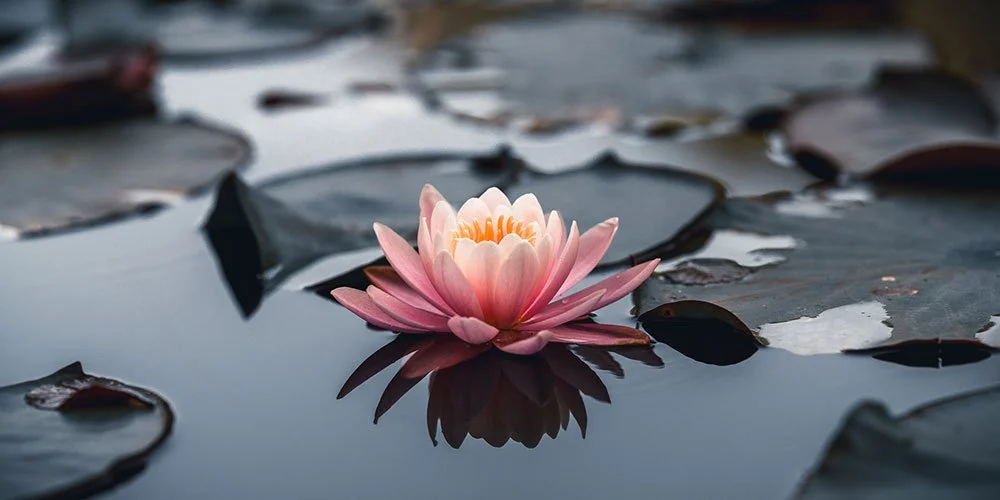
There is something wonderfully simple about meditation.
You don't need a special room, an hour of free time, or a perfectly quiet house. You don't need to be especially spiritual, flexible, disciplined, or even particularly good at sitting still.
You simply need a few minutes to pause.
In a world that constantly asks us to move, respond, accomplish, and keep up, meditation offers something different: an opportunity to stop doing and simply be.
That small pause can have a surprisingly meaningful effect on how we experience the rest of our lives.
Meditation and mindfulness have become popular words in the wellness world, but they are often used interchangeably. While they are closely connected, they aren't quite the same thing.
Understanding the difference can make both practices feel much more accessible—and much less intimidating.
What Is Mindfulness?
At its simplest, mindfulness is the practice of paying attention to the present moment.
It means noticing what is happening right now rather than constantly living in the past or anticipating what comes next.
You might notice the warmth of your coffee in your hands, the sound of rain outside, the feeling of your feet touching the floor, or the thoughts moving through your mind.
The important part is that you are actually there for the experience.
So much of our day happens on autopilot. We brush our teeth while thinking about our to-do list. We eat while scrolling through our phones. We drive while mentally rehearsing a conversation we're going to have later.
Mindfulness invites us back.
It doesn't ask us to change the moment. It simply asks us to notice it.
And mindfulness doesn't have to happen while sitting with your eyes closed. You can practice it while walking, cooking, gardening, drinking tea, washing dishes, making art, or spending time with your children.
It is less about what you're doing and more about how you're doing it.
What Is Meditation?
Meditation is a more intentional practice of training our attention and awareness.
During meditation, we might sit quietly and focus on the breath, a sound, a mantra, a visualization, a sensation in the body, or simply the experience of being present.
There are many different types of meditation, and they can feel very different from one another.
Some practices are calming and quiet. Others are more focused and structured. Some involve breathwork or visualization, while others simply invite you to observe your thoughts without becoming caught up in them.
One of the most common misconceptions about meditation is that you are supposed to stop thinking.
You aren't.
The mind is designed to think. Thoughts will come. Memories will appear. Your grocery list might suddenly become very important. You may remember an email you forgot to send.
That's okay.
Meditation isn't about having a completely empty mind.
It's about noticing when your attention has wandered and gently bringing it back.
Again and again.
That simple act is the practice.
Meditation vs. Mindfulness
One easy way to think about the difference is this:
Meditation is a practice. Mindfulness is a way of being.
Meditation is something you can intentionally set aside time to do.
Mindfulness is something you can bring into the rest of your day.
The two naturally support one another.
When you meditate regularly, you practice returning your attention to the present moment. Over time, that awareness can begin to spill into everyday life.
You may notice yourself pausing before reacting.
You may become more aware of your thoughts.
You may notice when you're rushing.
You may actually taste your food instead of eating it while thinking about what's next.
You may become more present for the small moments that make up an ordinary day.
Meditation gives you a place to practice stillness.
Mindfulness helps you carry that stillness with you.
The Benefits of Meditation
Meditation isn't a magic solution to life's problems, and it doesn't mean you'll suddenly become calm all the time.
Life will still be life.
There will still be busy mornings, difficult conversations, overflowing inboxes, and days when everything seems to happen at once.
But developing a regular meditation practice can change the way we meet those moments.
Research suggests that meditation and mindfulness practices can support a number of areas of well-being, including:
Stress Reduction
Meditation can help calm the body's stress response and give your mind a break from the constant stream of stimulation and demands.
Even a few quiet minutes can create a sense of space between you and whatever is happening around you.
Greater Self-Awareness
When we sit quietly, we begin to notice our thoughts, emotions, habits, and patterns.
Instead of automatically believing every thought that enters our mind, we can learn to observe our thoughts with a little more distance and curiosity.
Improved Focus
Meditation involves repeatedly bringing your attention back to one point of focus.
That practice can help strengthen our ability to notice when our attention wanders and return to what we're doing.
Emotional Well-Being
Meditation can create a little more space around difficult emotions.
Rather than immediately reacting to every feeling, we can learn to notice what we're experiencing and respond with greater awareness.
Better Sleep
For some people, meditation can be a helpful part of a relaxing nighttime routine. Quieting the mind and shifting away from the day's stimulation can make it easier to transition toward rest.
A Greater Sense of Calm
Perhaps one of the simplest benefits is also one of the most beautiful: meditation gives you permission to stop.
For a few minutes, there is nowhere else you need to be.
Nothing you need to accomplish.
Nothing you need to fix.
You can simply breathe.
You Don't Have to Be "Good" at Meditation
This is something I wish more people knew when they first begin.
You cannot fail at meditation.
If your mind wanders 100 times, and you notice it 100 times and gently return your attention, you have practiced meditation 100 times.
If you spend ten minutes sitting quietly and discover that your thoughts were everywhere, you haven't done it wrong.
You've noticed your thoughts.
That's awareness.
And that's the practice.
Meditation isn't about achieving a perfect state of calm. It's about developing a relationship with your own mind and learning that you can pause, breathe, notice, and begin again.
Start Small
You don't need to meditate for an hour every morning.
In fact, starting small can be one of the best ways to create a sustainable practice.
Try five minutes.
Find a comfortable place to sit. Put your phone away. Close your eyes or soften your gaze. Take a few slow breaths.
Then simply notice.
Notice your breath.
Notice your body.
Notice your thoughts.
When your mind wanders, come back.
That's it.
Over time, those few minutes can become a small ritual you look forward to—a quiet space in your day that belongs entirely to you.
And eventually, you may find that the stillness doesn't end when the meditation does.
You carry a little of it with you.
Making Meditation Part of Your Life
I think of meditation less as another thing to add to an already-full schedule and more as a way of creating space within the schedule you already have.
It can happen in the morning before everyone wakes up.
In the afternoon when the house is quiet.
Before bed.
After a walk.
Before a creative practice.
Or whenever you notice that you need to take a breath and come back to yourself.
There is no perfect time.
There is only the time you choose to pause.
And perhaps that is one of the greatest gifts of meditation: remembering that you are allowed to slow down.
You are allowed to be still.
You are allowed to take ten minutes for yourself without needing to earn it first.
A Gentle Way to Begin
If meditation is something you've been curious about but haven't known how to begin, I created Stillness: 21-Day Meditation Program as a simple, approachable introduction.
Stillness is a collection of 21 short meditation practices designed to help you explore different meditation techniques without making meditation feel complicated or overwhelming.
Each practice is about 10 minutes, making it easy to incorporate into your everyday life.
You don't need any previous meditation experience.
You don't need to know how to meditate.
You simply press play, get comfortable, and begin.
Over 21 days, you'll have the opportunity to experiment with different ways of becoming quiet, present, and connected to yourself—and hopefully discover the practices that feel most natural to you.
Because meditation doesn't have to be a big undertaking.
Sometimes, it can simply be ten quiet minutes.
A breath.
A pause.
A moment to come back to yourself.
A little stillness in the middle of everything else.
Begin Your 21 Days of Stillness
If you're ready to explore meditation in a simple, gentle way, I'd love for you to join me for Stillness: 21-Day Meditation Program.
21 days. 21 guided meditations. About 10 minutes a day.
No experience necessary.
[Join Stillness →]
Give yourself ten minutes a day to pause, breathe, and simply be.